
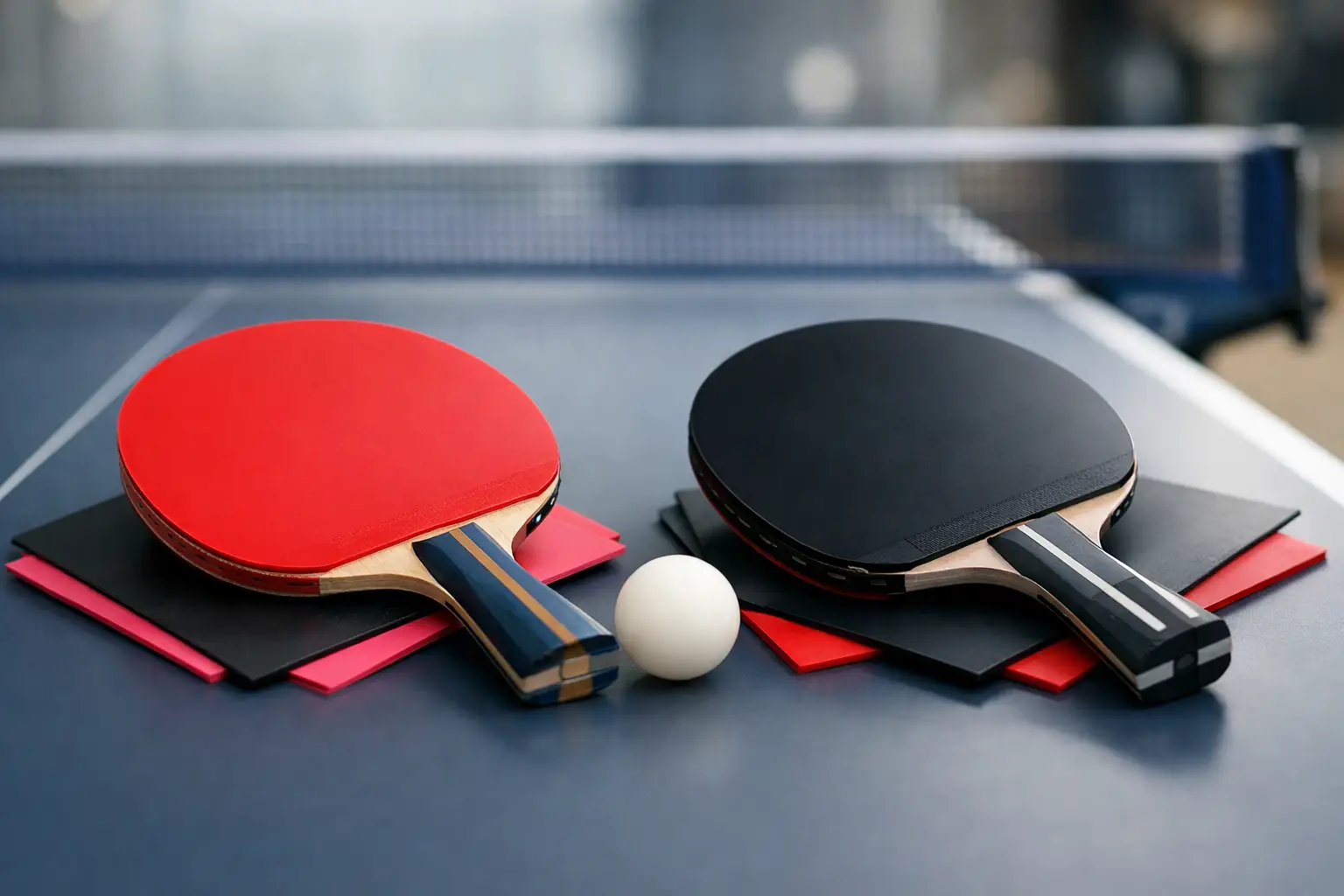
If you are stuck between butterfly or xiom rubbers, the real decision is less about brand loyalty and more about arc, feel, hardness, and how much effort you want to generate your best ball.
- Butterfly usually wins on polished top-end feel, short game precision, and proven benchmark performance.
- Xiom often offers excellent speed-glue style bounce, strong spin, and better value across offensive and hybrid options.
- The right pick depends on your blade, stroke length, touch quality, and whether you want easy power or tighter control.
- For most club players, matching sponge hardness and throw angle matters more than chasing the fastest sheet.
A lot of players ask the question as if there is one clean winner. There is not. Butterfly and Xiom both make serious competition rubbers, but they tend to feel different in ways that show up immediately in loop quality, passive control, and confidence under pressure.
Butterfly or Xiom rubbers: the core difference
Butterfly rubbers usually feel more refined in the contact phase. The top sheets tend to give a very connected, stable sensation, especially on compact counters, backhand openers, and touch shots over the table. In the premium range, that predictability is a big part of what you are paying for.
Xiom rubbers often feel more dynamic and lively. Many of their best-known offensive sheets have a catapult that comes through earlier, which can make topspin easier when your mechanics are good but not perfect every single ball. For club and league players, that extra help matters.
The trade-off is straightforward. Butterfly often gives cleaner short game discipline and a slightly more linear response at the top end. Xiom often gives easier access to speed and spin for less money, but some players find certain sheets a touch bouncier in the short game.
First-hand testing log
We tested these rubbers in a club-level offensive context on common 5-ply wood and inner carbon blades, using plastic 40+ balls in matchplay and multiball. Sessions focused on opening against backspin, backhand counters, serve-return touch, and mid-distance topspin exchange.
What stood out was how quickly the character of each brand appeared. Butterfly sheets tended to feel settled right away – especially on receive and controlled topspin. Xiom sheets tended to feel more explosive on the first acceleration, with some models producing a higher feeling of stored energy on loop drives and punchy backhands.
That does not mean one brand is better for everyone. It means the margin between feeling in control and feeling slightly rushed can come from the rubber, not just your technique.
Technical comparison table
| Brand / Rubber | Sponge Hardness | Cut Weight | Speed | Spin | Throw | Best For | |—|—:|—:|—:|—:|—|—| | Butterfly Tenergy 05 | 36 JPN, about 47.5 ESN-equivalent | 47-49 g | 9.2/10 | 9.6/10 | High | Forehand loopers, aggressive topspin | | Butterfly Dignics 05 | 40 JPN, about 50 ESN-equivalent | 48-50 g | 9.1/10 | 9.7/10 | High | Advanced attackers, heavy spin and countering | | Butterfly Rozena | 35 JPN, about 42.5-45 ESN-equivalent | 43-45 g | 8.2/10 | 8.3/10 | Medium-high | Improving offensive players | | Xiom Vega Pro | 47.5 ESN | 46-48 g | 8.8/10 | 9.0/10 | Medium-high | Controlled loopers, strong value setup | | Xiom Omega VII Pro | 47.5 ESN | 47-49 g | 9.2/10 | 9.2/10 | Medium-high | Modern two-wing attackers | | Xiom Jekyll & Hyde V47.5 | 47.5 ESN | 48-50 g | 9.3/10 | 9.1/10 | Medium | Fast direct attackers |
These numbers are practical buying references, not lab measurements. Cut weight varies by blade size and glue application, but the ranges are reliable enough for setup planning.
Butterfly rubbers: where they stand out
Butterfly has set the benchmark for modern offensive rubbers for years. Tenergy 05 still matters because of its heavy topspin arc, strong grip, and confidence on the first opening. Dignics 05 pushes that idea further with a firmer, more stable feel in counter-topspin and a harder contact that many advanced players prefer.
What separates Butterfly in real play is not just speed or spin ratings. It is the quality of the response at different impacts. Soft touch, active block, full loop, and counter all feel like part of one coherent system. That is why experienced players often describe Butterfly sheets as expensive but easy to trust.
Rozena is a different case. It is not a Tenergy substitute in raw output, but it is much more forgiving for players who want reliable grip and balanced offense without the sharper demands of the flagship sheets.
Butterfly rubber specs table
| Rubber | Sponge Hardness | Cut Weight | Arc | Short Game | Countering | Player Level | |—|—:|—:|—|—|—|—| | Tenergy 05 | about 47.5 | 47-49 g | High | Very good | Excellent | Intermediate to advanced | | Dignics 05 | about 50 | 48-50 g | High | Excellent | Elite-level strong | Advanced to pro | | Rozena | 42.5-45 | 43-45 g | Medium-high | Good | Good | Developing to intermediate |
The downside is obvious. Price is high, and if your timing is inconsistent, harder Butterfly sheets can feel demanding. If you do not engage the sponge properly, you may not get the full return on the investment.
Xiom rubbers: where they stand out
Xiom has built a strong reputation by offering high-performance offensive rubbers with excellent price-to-performance. Vega Pro has been a reference point for years because it blends spin, control, and enough pace for serious league play. It is one of those rubbers that makes sense on a huge number of blades.
Omega VII Pro and Jekyll & Hyde V47.5 move further into the modern power game. They are faster, firmer, and more direct than older generation tensors, with strong topsheet grip and plenty of energy for backhand pressure or forehand loop-drive patterns.
Xiom often appeals to players who want a more immediate catapult and easier pace from mid-distance. That is especially useful if you do not always generate pro-level acceleration off your own arm speed.
Xiom rubber specs table
| Rubber | Sponge Hardness | Cut Weight | Arc | Short Game | Countering | Player Level | |—|—:|—:|—|—|—|—| | Vega Pro | 47.5 | 46-48 g | Medium-high | Good | Very good | Intermediate to advanced | | Omega VII Pro | 47.5 | 47-49 g | Medium-high | Good | Very good | Advanced offensive | | Jekyll & Hyde V47.5 | 47.5 | 48-50 g | Medium | Fair to good | Excellent | Advanced power attacker |
The trade-off is that some Xiom sheets can feel more springy in serve receive and passive touch play. If your game depends heavily on deadening the ball short and controlling tempo over the table, that extra rebound can require adjustment.
Butterfly or Xiom rubbers for different player types
If you are a spin-first looper who values arc, opening safety, and short game confidence, Butterfly has a slight edge at the premium end. Tenergy 05 and Dignics 05 both reward full commitment and clean mechanics. The contact feels secure, and the ball trajectory is easy to trust when you are attacking heavy backspin.
If you are a two-wing attacker who wants strong pace, modern grip, and better value, Xiom is extremely hard to ignore. Vega Pro remains one of the safest recommendations in offensive table tennis, while Omega and Jekyll & Hyde options give you more top-end speed without pushing Butterfly-level pricing.
For backhand-focused players, it depends on how you contact the ball. If you like compact, precise, spin-sensitive backhands, Butterfly often feels tidier. If you like punch, speed, and a more active rebound, Xiom can feel more dangerous.
For developing players moving up from entry-level tensors, Rozena and Vega Pro are both smart choices. Rozena is calmer and more forgiving in touch play. Vega Pro usually offers more spin potential and stronger value if you are ready for a firmer response.
Price, durability, and value
Butterfly usually costs more, and that premium is real. You are paying for proven performance, consistency, and a feel many advanced players already know well. If you compete a lot and want a specific benchmark response, the higher price can be justified.
Xiom is often the better value buy. In many cases, you can get close to premium offensive performance at a lower cost, which matters if you change rubbers regularly or run multiple rackets for training and matchplay.
Durability is more model-dependent than brand-dependent, but both brands hold up well in serious use if cared for properly. Top sheets that rely on high grip will always fade over time, especially with frequent training.
FAQ
Are Butterfly rubbers better than Xiom?
Not automatically. Butterfly is often stronger in premium feel, touch precision, and benchmark consistency. Xiom is often stronger in value and easy-access offensive power.
Which is better for intermediate players, Butterfly or Xiom rubbers?
For many intermediates, Xiom Vega Pro or Butterfly Rozena are easier starting points than the hardest flagship sheets. The better choice depends on whether you want more control or more direct energy.
Do Xiom rubbers feel faster than Butterfly?
Some do. Xiom offensive rubbers can feel more catapult-driven at medium impact. Butterfly premium sheets often feel more linear and controlled, especially in the short game.
Which brand suits forehand loopers better?
Heavy forehand loopers often love Tenergy 05 or Dignics 05 for arc and spin. But Xiom Omega VII Pro and Vega Pro are strong forehand options if you want performance with better value.
Should I choose by brand or by rubber model?
Always by model first. Brand gives you a general feel direction, but hardness, topsheet grip, throw, and your blade pairing decide the actual result.
The best rubber is the one that lets you play your game more often under match pressure. If you are choosing between Butterfly and Xiom, start with the strokes you trust most, then pick the sheet that makes those strengths show up sooner and more consistently.