
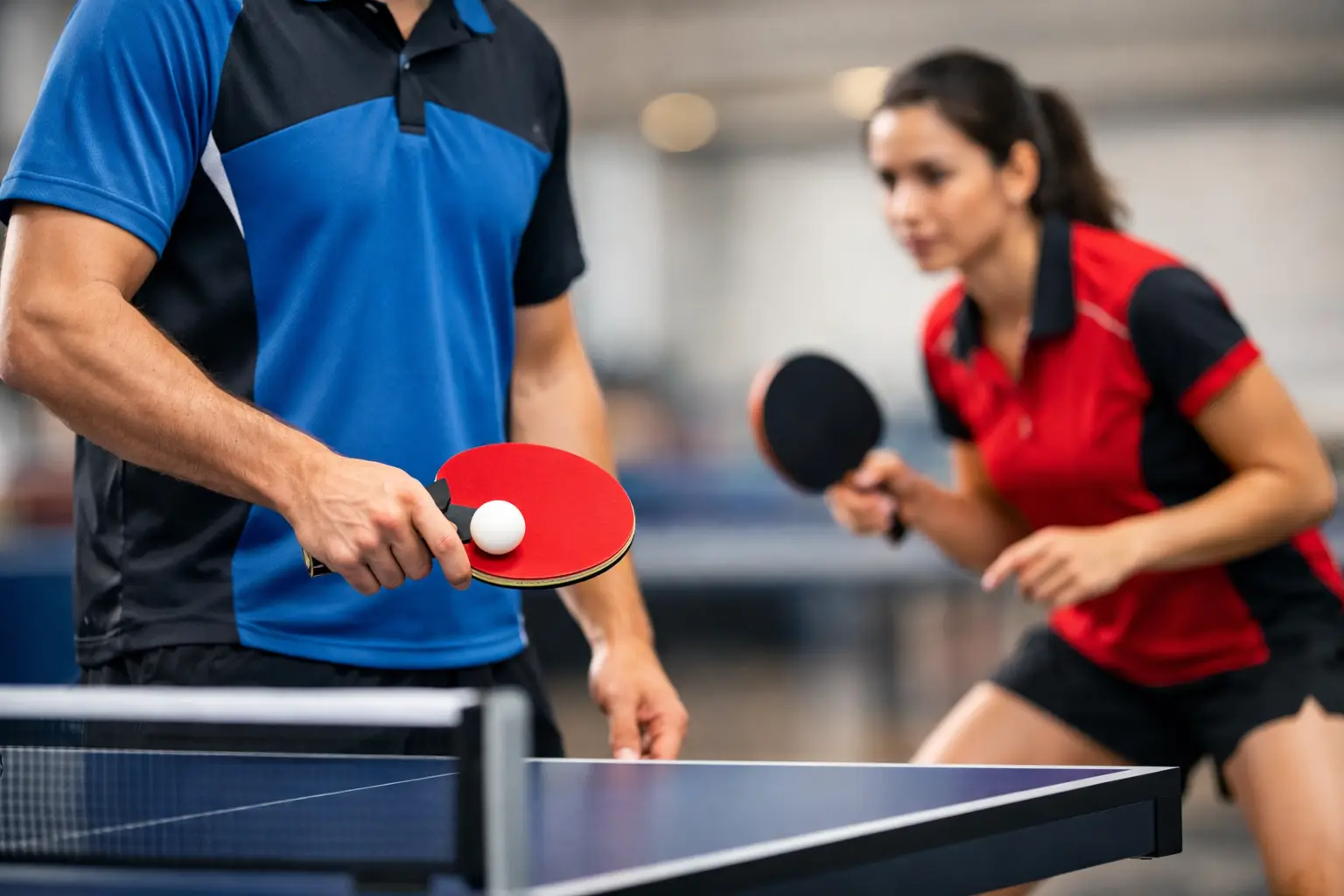
Quick take
- The best table tennis sportswear improves movement efficiency, temperature control, and traction rather than simply matching a team kit.
- Fit matters more than most players think – shirts that cling, shorts that ride up, and heavy shoes all cost points over a long match day.
- Fabrics, cut, and sole design should match your level, playing style, and venue conditions.
- If you compete regularly, shoes deserve the biggest share of your apparel budget because grip, cushioning, and lateral support directly affect footwork quality.
A five-game match in a warm sports hall exposes bad gear fast. Heavy cotton sticks to the back, loose shorts catch during wide forehand recovery, and flat generic indoor shoes feel fine until the third hard crossover. That is where table tennis sportswear stops being a style choice and starts becoming performance equipment.
For serious players, apparel has one job – remove distractions. You want clothing that stays light through sweat, allows full shoulder rotation, and keeps your footwork sharp on quick first steps, side shuffles, and sudden braking. The right setup will not fix a late backhand block or a poor serve receive, but it can make movement cleaner and more repeatable across a full training session or tournament day.
What good table tennis sportswear actually does
Table tennis places unusual demands on clothing compared with many court sports. Movement is explosive but contained. Rally patterns involve low stance changes, rapid lateral recovery, and constant upper-body rotation. That means your sportswear needs to handle stretch, moisture, and repeated acceleration without becoming noticeable.
A good match shirt is usually lightweight polyester or a polyester blend in the 110 to 160 gsm range. That weight is light enough for airflow but substantial enough to avoid a flimsy, clingy feel once sweat builds. Many performance shirts also use mesh side panels or laser-cut ventilation zones to increase air exchange where players overheat most.
Shorts typically perform best with a 5 to 7 inch inseam, depending on height and preference. Go too long and fabric can interfere with low movement or feel restrictive around the quads. Go too short and some players feel exposed during deep lunges. The useful middle ground is a cut that opens easily at the hem and stays stable through repeated side-to-side steps.
Shoes are even more specific. Table tennis footwear is built for indoor grip, low ride height, and quick directional response. Most strong models sit in the 240 to 320 gram range per shoe in common adult sizes, with thinner midsoles than volleyball or running shoes. That lower profile improves court feel and keeps transitions quicker, but it also means cushioning can be limited for heavier players or those spending long hours coaching.
How to choose table tennis sportswear by category
Shirts and jerseys
Start with fit. For competition and hard training, an athletic fit usually performs better than a relaxed one because excess fabric can pull across the torso during forehand loops and backhand counters. At the same time, skin-tight compression-style tops are not ideal for everyone. If the fabric lacks enough stretch, shoulder mobility can feel restricted, especially for bigger servers who use a lot of trunk rotation.
Look for moisture-wicking synthetics, smooth seam construction, and enough length to stay in place when you bend low over the table. Darker colors often hide sweat better, but breathability matters more than appearance once the hall warms up.
| Shirt spec | Ideal range | Why it matters | |—|—:|—| | Fabric weight | 110-160 gsm | Balances light feel and structure | | Polyester content | 85-100% | Improves moisture management and drying speed | | Stretch | 8-15% elastane if blended | Supports full rotation and recovery | | Ventilation zones | 2-6 panels | Helps heat release in match conditions |
Shorts
Table tennis shorts need to disappear when you move. Lightweight woven fabrics with slight mechanical stretch work well because they stay off the thigh and recover shape quickly. Deep pockets are useful for training, especially multiball or serve practice, but some players prefer flatter pockets in competition to keep the silhouette clean and avoid ball movement.
The waistband matters more than people expect. A secure elastic waistband with a drawcord keeps the shorts stable during repeated split steps and low pushes. If the waistband twists or loosens, you will notice it every few points.
| Short spec | Ideal range | Why it matters | |—|—:|—| | Inseam | 5-7 in | Supports free movement without excess fabric | | Fabric weight | 90-140 gsm | Keeps shorts light and fast-drying | | Stretch | Low to moderate | Helps during wide lateral movement | | Pocket depth | 5-7 in | Useful for training ball carry |
Socks
Socks are easy to overlook until you start sliding inside the shoe. For table tennis, thin to medium-cushion socks usually outperform bulky models because they preserve fit precision. Good options include reinforced heel and forefoot zones, arch compression, and moisture management that reduces friction.
| Sock spec | Ideal range | Why it matters | |—|—:|—| | Cushion level | Light-medium | Maintains court feel and fit | | Height | Quarter-crew | Balances support and ventilation | | Compression zones | Arch and ankle | Improves lockdown feel | | Fabric blend | Synthetic-rich | Better sweat control than cotton-heavy socks |
Shoes
If you upgrade only one part of your table tennis sportswear, make it the shoes. The key variables are grip, flexibility, lateral support, and total weight. Aggressive movers who stay close to the table usually benefit from a lighter, more responsive shoe. Players who coach, train for long hours, or carry more body weight may want slightly more cushioning even if it adds 20 to 40 grams.
The sole compound should grip clean indoor flooring without feeling sticky on every pivot. Too much bite can be as awkward as too little because table tennis still needs controlled rotation through the hips and feet.
| Shoe spec | Competitive range | Why it matters | |—|—:|—| | Weight | 240-320 g | Affects foot speed and fatigue | | Heel-to-toe drop | 4-8 mm | Keeps stance low and balanced | | Sole hardness | Medium-soft | Balances grip and durability | | Midsole stack | 18-28 mm | Controls court feel vs cushioning |
The trade-offs serious players should know
Lighter is not always better. Ultra-light shirts can feel excellent in a short session, but some become clingy once fully wet. Minimal shoes feel fast, but they can also punish players with knee sensitivity or those training on harder indoor surfaces for three hours at a time.
Fit is also personal. A loop-oriented player with bigger torso rotation may prefer more room across the upper back, while a compact blocker may want a trimmer cut that never shifts. Juniors in growth phases often need a little extra sizing headroom, but too much spare fabric can hurt movement quality and confidence.
There is also a durability question. Premium matchwear often uses finer, lighter fabrics that feel better on court but may not last as long under heavy weekly washing or repetitive robot sessions. If you train four or five times per week, it makes sense to rotate at least two shirts, two pairs of shorts, and two pairs of socks rather than overusing one set.
Match wear vs training wear
Not every session needs your lightest competition kit. For daily training, durability and comfort usually matter more than team-presentation details. A slightly heavier shirt with stronger stitching can be the smarter buy for regular club use, especially if you are doing multiball or physical drills.
For tournament play, prioritize lower weight, cleaner fit, and dependable shoes with fresh grip. That is where premium brands tend to justify their price. The jump is not just logo value. Better panel construction, cleaner seam placement, and more stable outsole design can be felt when intensity goes up.
Players shopping specialist retailers such as TTMode.com usually benefit from comparing table tennis-specific apparel rather than generic indoor sports gear. The cuts, materials, and shoe geometry are simply more aligned with the demands of the sport.
FAQ
Do I really need table tennis-specific shoes?
If you play casually once in a while, not always. If you train seriously or compete, yes. Table tennis shoes are lower, quicker, and better tuned for short lateral movement than most general indoor trainers.
Is cotton ever a good choice for table tennis sportswear?
For light recreational use, it is fine. For structured training and matches, cotton holds sweat, gets heavy, and dries slowly. Performance synthetics are the better option.
Should table tennis shirts fit tight or loose?
Neither extreme is ideal. The best fit is close enough to avoid excess movement but loose enough to allow full shoulder and trunk rotation.
How often should I replace table tennis shoes?
Frequent players often replace them every 6 to 12 months, depending on body weight, court time, and outsole wear. Loss of grip and midsole compression are the real signals, not just cosmetic damage.
Are expensive jerseys worth it?
Sometimes. You usually pay for better fabric behavior, lower weight, improved ventilation, and cleaner construction. The difference is most noticeable in hot venues and long match days.
The best table tennis sportswear feels unremarkable in the best possible way. It stays out of your head, keeps your movement free, and lets the match be about timing, touch, and footwork instead of sweat, slippage, or distraction. Choose with the same care you give your blade and rubbers, and your gear setup starts working as one system.