
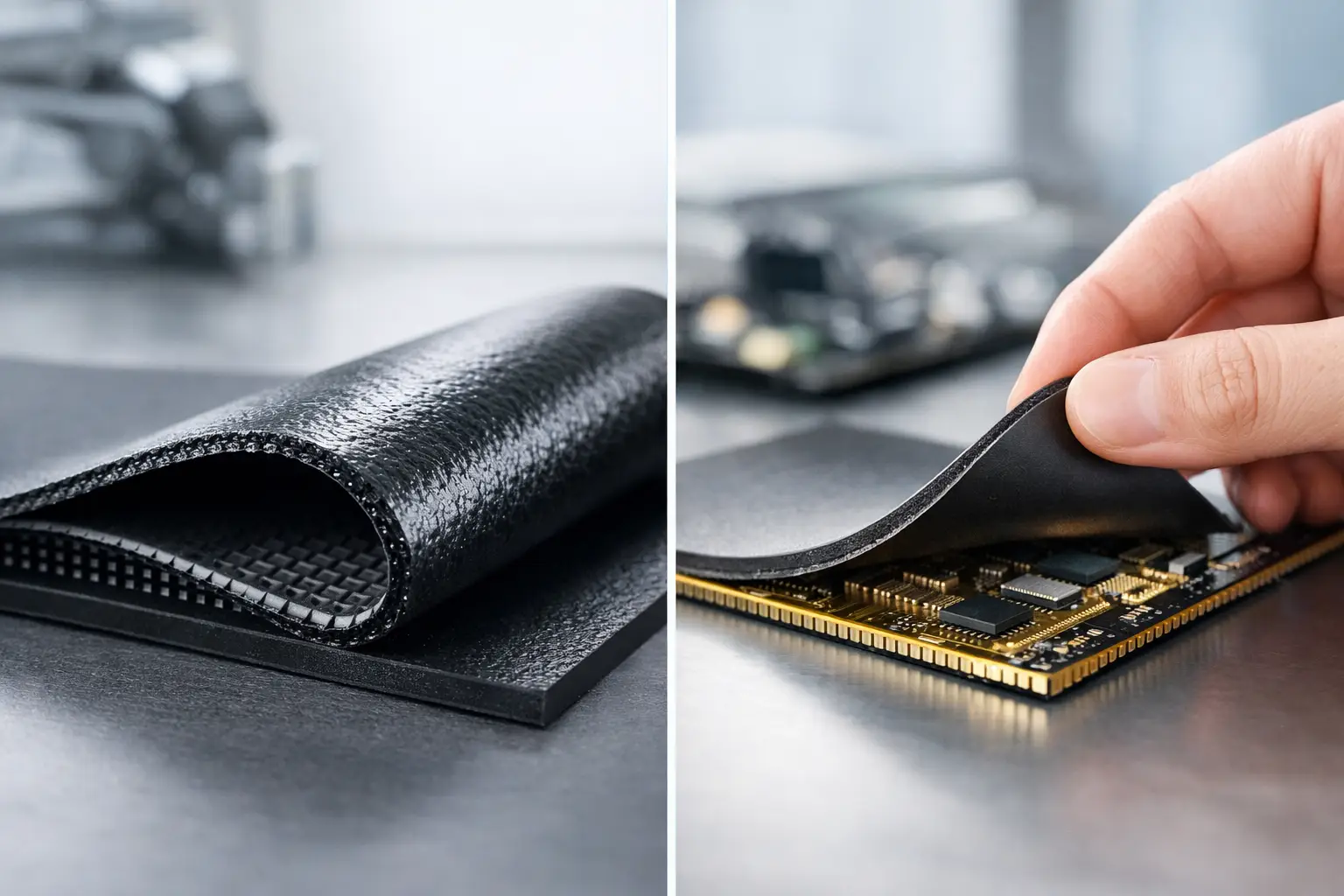
If your loops fly long with one sheet and die in the net with another, you are not imagining it. In tensor rubber vs hybrid debates, the real difference is not just speed. It is how the sponge loads, how the topsheet grips, and how much of the work the rubber does for you on passive and active contacts.
- Tensor rubbers usually feel livelier, easier to access, and more forgiving in open rally play.
- Hybrid rubbers usually offer a grippier, more deliberate contact with stronger spin potential on committed strokes.
- The best choice depends on swing size, timing quality, blade pairing, and whether you win more points through pressure or precision.
- Weight, sponge hardness, and catapult level matter as much as the label on the package.
Tensor rubber vs hybrid at a glance
For serious players, this comparison is really about energy return and contact behavior. Tensor rubbers are built to create a pronounced built-in catapult. They tend to feel springier in the short game and more explosive when you counter from mid distance. Hybrid rubbers combine a tackier or more adhesive topsheet feel with a modern sponge, so they often give a firmer, more controlled first impression and reward a fuller stroke.
That is why two offensive rubbers with similar hardness numbers can play very differently. A 50 degree tensor may still feel easier to engage than a 50 degree hybrid because the sponge and topsheet work together in a less linear way. On paper they can look close. On the table they rarely do.
What defines a tensor rubber?
Tensor rubbers are designed around stored tension and dynamic rebound. In practical terms, that means easier pace on compact strokes, a higher level of built-in speed, and a more elastic feel on topspin exchanges. This category has been dominant for European and Japanese style offensive play because it helps players produce quality without needing a massive swing every time.
A typical tensor profile looks like this:
| Spec | Typical tensor range | | — | — | | Sponge hardness | 42.5 to 53 degrees | | Cut weight | 44 to 52 g | | Topsheet grip | Grippy, usually non-tacky | | Catapult | Medium-high to high | | Throw angle | Medium to high | | Best distance | Close to mid distance |
In match play, tensor rubbers generally help on backhand counters, transition balls, and quick topspin over the table. They are often the easier option for players who rely on timing, quick acceleration, and taking the ball early.
What defines a hybrid rubber?
Hybrid rubbers blend a sticky or semi-sticky topsheet feel with a tensioned or boosted-style sponge concept. The result is usually more bite on the ball, a flatter and more direct response in the short game, and a stronger sense of control when brushing hard. They do not always feel fast at low impact, but they often open up when you commit.
A common hybrid profile looks like this:
| Spec | Typical hybrid range | | — | — | | Sponge hardness | 47.5 to 55 degrees | | Cut weight | 48 to 55 g | | Topsheet grip | Grippy to mildly tacky | | Catapult | Low-medium to medium | | Throw angle | Medium | | Best distance | Close to mid distance |
This is why hybrids appeal to players coming from Chinese-style rubbers who want more modern rebound, or from tensors who want more spin confidence on serves, opening loops, and loaded first attacks.
Spin, arc, and speed in tensor rubber vs hybrid
Spin is where the conversation gets interesting, because both categories can produce a lot of it, but not in the same way. Tensor rubbers usually generate spin through topsheet grip plus sponge rebound. That makes spin creation easier at medium effort. You get a high arc, good safety over the net, and fast topspin exchanges without having to overwork every ball.
Hybrid rubbers tend to generate spin through a more deliberate contact. The ball sinks less automatically and grabs more distinctly. On service, slow spinny openers, and loaded first loops, many players feel they can shape the ball more precisely. The trade-off is that passive shots can feel deader and less forgiving if your contact is late or hesitant.
For raw speed, tensor usually wins on easy access. For heavy first-ball quality, hybrid often wins when the stroke is complete. That difference matters. If your game is built on quick counters and backhand pressure, tensor is often the simpler performance choice. If your game starts with serve, receive, and a heavy opening forehand, hybrid can feel more dangerous.
Short game, receive, and blocking
The short game is often where players decide whether they can live with a rubber. Tensor rubbers can feel more reactive on touch shots. That helps when flicking or rolling over the table, but it can also mean more bounce on short pushes and receives if your hand is not relaxed.
Hybrid rubbers are usually calmer at low impact. That gives many players better confidence on drop shots, touch receives, and loaded pushes. The extra grip can also help on banana flicks, although harder hybrids demand cleaner technique than softer tensors.
Blocking is mixed. Tensors can be excellent for active blocks and quick redirection because the rebound is easy to access. Hybrids can feel more stable against heavy incoming spin, but if the rubber is hard and the blade is stiff, passive blocking may require more precise angle control.
Technical comparison table
| Performance factor | Tensor rubber | Hybrid rubber | | — | — | — | | Easy speed | High | Medium | | Top-end power | High | High | | Short game control | Medium | High | | Serve spin | High | Very high | | Loop safety | High | Medium-high | | Counterloop ease | High | Medium | | Passive forgiveness | High | Medium-low | | Weight burden | Lower on average | Higher on average | | Best for compact strokes | Yes | Less often | | Best for full acceleration | Good | Excellent |
Who should choose tensor rubber vs hybrid?
If you are a developing club player or a league player who wants immediate offense without a long adjustment period, tensor is usually the safer buy. It suits players who attack on both wings, rely on quick rally exchanges, and want speed available even when footwork is not perfect. It is also more forgiving on the backhand for most players.
Hybrid makes more sense if you already create your own acceleration and want a rubber that stays composed in touch play. Forehand-dominant attackers, spin-first players, and those who value serve quality and heavy opening loops often get more out of hybrid once they adapt to the harder, more linear feel.
A useful rule is this: if you win points through pace in open play, start with tensor. If you win points by setting up the first heavy ball, start with hybrid.
First-hand testing log: what players usually notice
Across common shop testing and customer feedback patterns, the same comments come up again and again. Players switching from classic tensors to hybrids usually notice three things within the first session. The racket feels heavier, the short game feels tighter, and they need a more confident swing to get the same easy depth.
Players moving from hybrids back to tensors usually say the opposite. The racket feels more lively, backhand speed comes more easily, and passive contacts jump more than expected. Neither reaction means one rubber is better. It means the timing window changes.
In practical setup terms, a 2 to 4 gram difference in cut weight can affect bat balance more than many players expect. On a head-heavy blade, that is enough to change wrist speed on receive and backhand recovery.
Blade pairing matters more than most players think
A soft inner-carbon blade can make a hard hybrid feel more manageable and increase dwell time. Put that same hybrid on a stiff outer-carbon blade and the setup may become too direct for anyone below advanced level. Tensor rubbers are usually easier to pair because their catapult fills in some missing speed on controlled blades.
If you use an all-wood blade and want more finishing power, a tensor often creates the cleaner upgrade path. If you use a fast carbon blade and want to calm down touch play without giving up offense, a hybrid can be the smarter correction.
FAQ
Is hybrid always better for forehand?
No. It is common on the forehand because many players use a longer stroke there, but plenty of two-wing attackers still perform better with a medium-hard tensor on forehand because it gives them easier speed and a safer arc.
Is tensor better for backhand?
For most players, yes. The easier rebound and lighter overall feel make tensor more backhand-friendly, especially for compact topspins, counters, and quick transitions.
Are hybrid rubbers just tacky Chinese rubbers with catapult?
Not exactly. Some lean strongly in that direction, but the category is broader. Many hybrids are only mildly tacky and feel more European in rebound than traditional Chinese sheets.
Do harder rubbers always mean more spin?
No. Hardness affects feel and compression, but topsheet grip, sponge elasticity, and your contact quality matter just as much. A harder rubber can produce more spin in strong hands, but less in hesitant ones.
Which lasts longer, tensor or hybrid?
It depends on the topsheet formula and how often you play. In general, hybrids can keep a more stable low-impact feel for longer, while some tensors lose their fresh bounce earlier. Surface grip wear still matters in both categories.
The best equipment choice is the one that supports your actual point patterns, not the one that sounds more advanced. If you are between the two, choose the rubber that lets you trust your first three balls and play your natural game with conviction.