
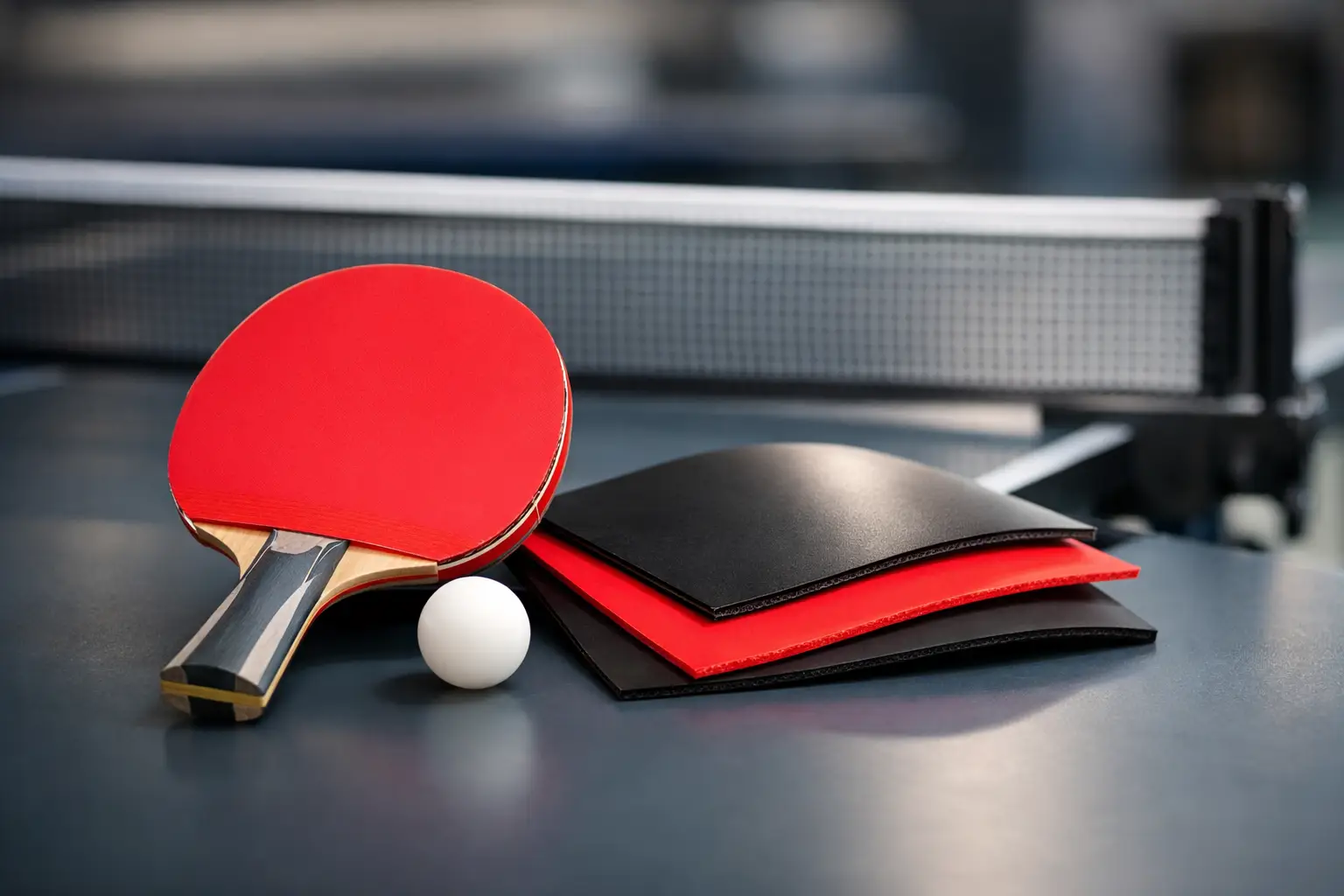
- Looping rubber is not just about maximum spin – sponge hardness, topsheet grip, throw angle, and weight all change how your loop actually lands.
- Softer, higher-throw rubbers help developing loopers lift backspin more easily, while harder rubbers reward stronger technique and faster acceleration.
- Your blade matters. The same rubber can feel controlled on a flexible 5-ply blade and demanding on a fast carbon blade.
- If you are asking which table tennis rubber for looping, the best choice depends on whether you prioritize easy arc, power from mid-distance, or all-around rally stability.
If you have ever borrowed a teammate’s racket and suddenly found your opening loop either kicking like crazy or flying long, you already know the answer to which table tennis rubber for looping is never one-size-fits-all. Looping is where rubber choice shows up immediately. The ball either bites, climbs, and dips onto the table – or it does not.
For serious players, the key is to stop shopping by brand name alone and start shopping by loop behavior. You want to know how the rubber handles thin brush contact, how stable it is on power loops, how much arc it gives against backspin, and whether the weight makes your racket feel sluggish after two games.
What matters most in a looping rubber
A loop-focused rubber needs three things working together: grip, sponge support, and a throw angle that matches your stroke. Grip determines how confidently the topsheet grabs the ball on fine contact. Sponge support decides whether the rubber bottoms out too early or holds firm through stronger acceleration. Throw angle affects the shape of your arc, which is often the difference between a safe heavy loop and a shot into the net.
Hardness is the first spec most players check, but it only tells part of the story. A 47.5 degree tensor can feel lively and elastic, while a Chinese-style 39-41 degree tacky rubber can feel much firmer in play because of the denser sponge structure and less catapult. That is why two rubbers with similar listed hardness can play very differently in looping exchanges.
Weight matters more than many club players admit. Heavy forehand rubbers can improve stability on full swings, but they also raise swing fatigue and slow wrist recovery in backhand transitions. For juniors, developing players, or anyone using a head-heavy blade, ten grams can be the difference between sharp acceleration and late contact.
Which table tennis rubber for looping depends on your stroke
If your game is built around heavy forehand opening loops against backspin, you usually benefit from a grippy or tacky topsheet with strong dwell and enough arc to clear the net safely. If you are more of a counterlooper from mid-distance, you may prefer a harder sponge with more top-end power and a direct rebound.
Backhand loopers often need something different from forehand loopers. On the backhand side, easier compression, lower overall weight, and quick rebound tend to matter more than maximum spin potential. Many advanced players still use a harder or tackier forehand rubber and a more dynamic European or Japanese tensor on the backhand for exactly this reason.
Blade pairing changes the whole recommendation. A limba outer 5-ply wood blade usually adds dwell and helps spin development. Put the same rubber on a stiff outer-carbon blade and the contact becomes shorter, flatter, and more demanding. When players say a rubber is “too hard” or “too bouncy,” the blade is often half the story.
Best rubber profiles for looping
Rather than forcing one answer, it is more useful to break looping rubbers into three performance families.
Easy-spin loopers
These are typically medium or medium-soft rubbers with strong mechanical grip, noticeable catapult, and a medium-high to high throw. They help players lift underspin with less perfect timing and create quality spin even when the stroke is not explosive.
This category suits developing offensive players, all-around attackers, and backhand-dominant loopers. The trade-off is that on full power, some softer options can feel less stable and may launch slightly higher than desired.
Balanced offensive loopers
This is the sweet spot for many league and tournament players. You get enough sponge firmness for power, enough grip for loaded opening loops, and enough control to survive passive blocks and short game touch. Medium-hard offensive tensors often live here, especially in the 45-48 degree range.
For most players asking which table tennis rubber for looping, this is the safest answer. It gives room to improve without immediately becoming too technical or too dead.
Power loopers
These rubbers are usually harder, heavier, and more demanding. They reward fast acceleration, strong body mechanics, and confident contact. In exchange, they give a heavier ball, better stability through counterloop rallies, and more confidence from mid-distance.
The catch is obvious. If your touch is late or your swing speed drops, these rubbers can feel flat on opening loops and unforgiving over the table.
Expert comparison table for looping rubbers
The table below uses typical market ranges and playing characteristics rather than pretending every sheet behaves identically out of the package. Small production and cut-size differences always apply.
| Rubber profile | Sponge hardness | Cut weight range | Throw angle | Grip type | Looping strength | Best for | |—|—:|—:|—|—|—|—| | Easy-spin tensor | 42.5-45° | 43-47 g | Medium-high to high | Mechanical grip | Easy opening loops, safer arc | Developing attackers, backhand loopers | | Balanced offensive tensor | 45-48° | 46-50 g | Medium to medium-high | Strong mechanical grip | Opening loop plus counterloop balance | Club and league offensive players | | Hard power tensor | 50-53° | 48-53 g | Medium | Mechanical grip with firm support | Fast topspin and mid-distance power | Advanced attackers | | Hybrid tacky tensor | 47-52° | 49-54 g | Medium-high | Tacky plus elastic | Heavy spin on first loop, strong dip | Forehand-dominant loopers | | Classic tacky Chinese style | 39-41° CN scale | 47-52 g | Medium-high | High tack | Spinny brush loop, loaded opener | Players with active acceleration |
First-hand testing log: how these profiles feel in play
In short contact over the table, easy-spin tensors feel the most forgiving. On half-long underspin balls, the ball lifts with less effort and the arc is visibly safer. The rebound can be springier in the short game, so touch players sometimes need a few sessions to settle the receive.
Balanced offensive tensors are the most complete in match play. In testing through opening loop, block, punch, and counterloop drills, this category usually gives the cleanest compromise between spin quality and rally stability. It is the profile many ambitious club players keep coming back to after experimenting with extremes.
Hard power tensors produce the heaviest ball when the swing is there. Against topspin, they stay composed and drive through the sponge without the sensation of collapse. But in multiball opening-loop drills, weaker contacts show up immediately. You earn the performance.
Hybrid tacky rubbers stand out on the first forehand attack. The topsheet grabs the ball well on fine contact, and the harder sponge keeps the shot from feeling mushy. They can be exceptional for players who want a modern forehand setup with more spin emphasis than a pure Euro tensor, though they are often heavier and less forgiving on passive backhand play.
How to choose by level and playing style
If you are a beginner moving into real topspin play, do not start with the hardest pro-level sheet you can find. A medium or medium-soft looping rubber with a friendly arc will help you build contact quality faster. You need feedback and repeatability more than headline speed.
If you are an intermediate club player with a reliable opening loop, look at medium-hard offensive rubbers first. This is the most versatile zone for players who attack both backspin and topspin and still need enough touch for serve receive and blocking.
If you are an advanced forehand looper who uses full-body acceleration and plays from both close and mid-distance, harder tensors or hybrids make more sense. At that level, you are usually chasing stability, spin under pressure, and a heavier finishing ball rather than easy catapult.
For backhand looping, be honest about your contact window. Many players imagine they need the same hardness on both sides, but their backhand becomes cleaner and more dangerous with a slightly softer, lighter, more direct sheet.
Common mistakes when choosing a looping rubber
The first mistake is choosing only by what professionals use. Elite players have speed, timing, and training volume that let them activate harder setups properly. For most club players, the better rubber is the one that lands the opening loop under pressure, not the one that looks best on paper.
The second mistake is ignoring racket balance. A rubber might be outstanding for spin, but if the setup becomes too head-heavy, your loop quality can actually drop late in matches. The third is changing too many variables at once. If you switch blade, sponge hardness, and topsheet style together, it becomes difficult to know what improved or what got worse.
FAQ
What sponge hardness is best for looping?
For most offensive players, 45-48 degrees is the most practical range. It gives enough support for power while still making opening loops against backspin manageable.
Is tacky or non-tacky rubber better for looping?
It depends on your stroke. Tacky and hybrid rubbers often excel on spinny first attacks, while non-tacky tensors usually feel easier in fast rally exchanges and backhand play.
Is a softer rubber better for learning to loop?
Usually, yes. A softer or medium sponge with decent grip helps you create arc and feel the ball more clearly, which makes technique development easier.
Which side should get the better looping rubber, forehand or backhand?
For most players, the forehand deserves the more spin-oriented and specialized sheet. The backhand often benefits from a lighter, more forgiving rubber unless your game is backhand-dominant.
The right looping rubber should make your best attacking pattern easier to repeat, not harder to access. If a sheet gives you confidence on the first loop and keeps your racket balanced through a full match, you are much closer to the right answer than any marketing label can tell you.