
Key takeaways
- If you are learning how to choose anti spin rubber, start with your playing intent – pure disruption, controlled blocking, or active attacking.
- Friction level, sponge hardness, and overall speed matter more than brand hype. Those three specs define how the rubber behaves.
- Anti-spin works best when it matches the blade and backhand technique. A slow anti on a fast carbon blade can still feel too lively.
- Most players choose the wrong anti by going too extreme too early. Control-first setups usually win more matches.
A lot of players switch to anti-spin after the same match pattern keeps showing up: they read the serve, make the right move, and still lose the rally because the incoming spin is just too heavy to manage. Anti can solve that problem, but only if you choose the right type. If you are figuring out how to choose anti spin rubber, the real question is not just which sheet is “best.” It is what kind of anti helps your game win points.
What anti-spin rubber actually changes
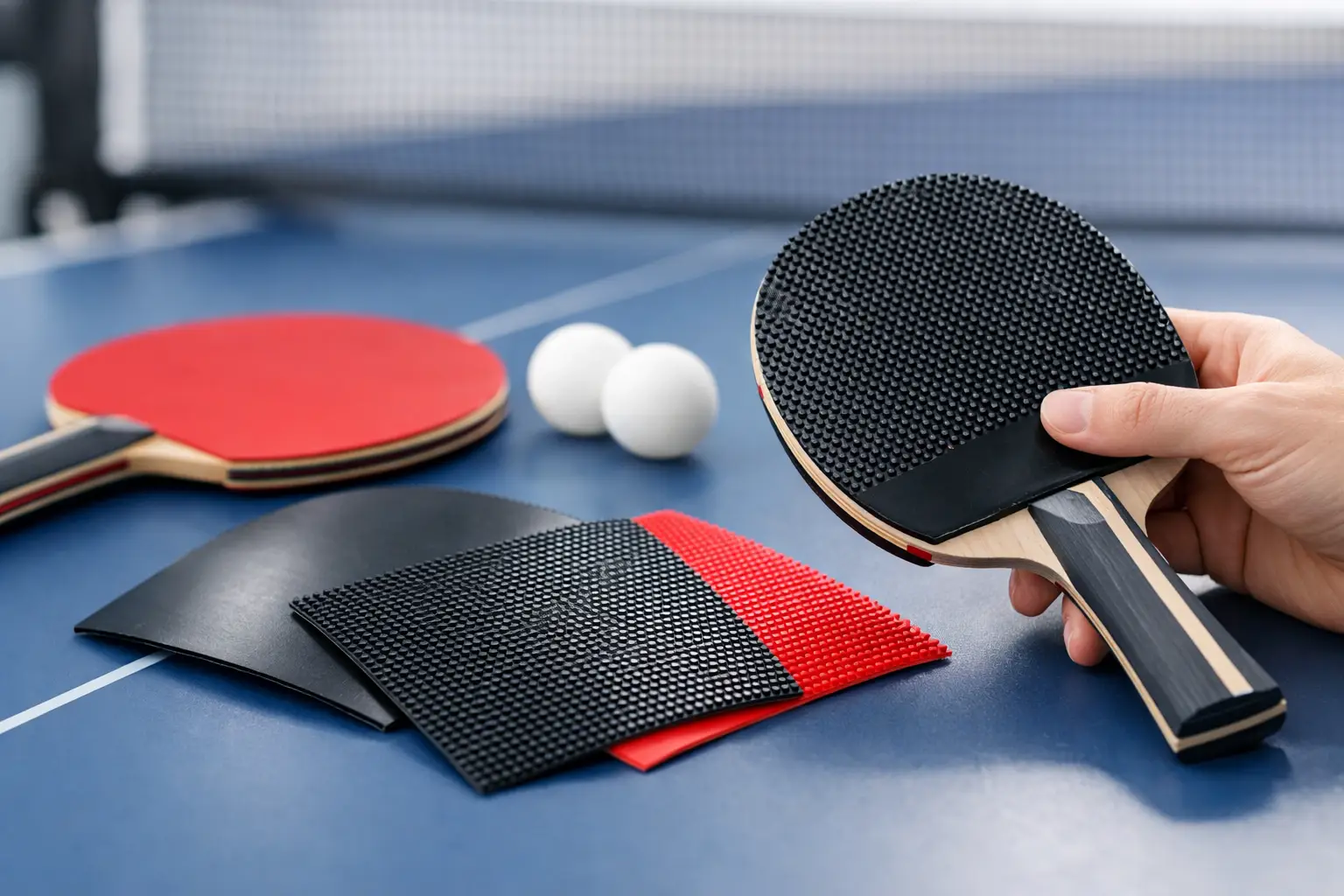
Anti-spin rubber is built to reduce friction dramatically compared with inverted rubber. That means less grip on the ball, less sensitivity to incoming spin, and a flatter, lower-interaction contact. On the table, that usually translates into easier returns against heavy topspin and sidespin, slower pace, and the chance to send awkward balls back with altered spin behavior.
But anti is not one thing. Some sheets are classic control anti – low speed, moderate reversal, very safe on blocks and pushes. Others are frictionless-style disruptive anti – extremely dead, very low grip, and much more dependent on precise angle control. Then there are active anti rubbers that still allow some hitting, rolling, or countering if the sponge is more responsive.
That is the first split to understand. If your game is built around passive disruption, your ideal anti will be very different from the anti a close-to-table allround blocker or twiddling combination player needs.
How to choose anti spin rubber for your playing style
The fastest way to narrow the field is to define what you want the rubber to do in real match play.
If you are a classic blocker playing close to the table, you usually want low speed, high control, and strong spin insensitivity. This helps on serve return, backhand blocks, and short touch play. A very soft or dampened anti can make the racket feel quieter and easier to control under pressure.
If you are a disruptive player who wants ugly trajectories and awkward timing for the opponent, focus on low friction and reversal effect. The trade-off is that these rubbers can feel less intuitive on active strokes. You gain disturbance but lose some attacking freedom.
If you still want to punch, hit, or drive with the anti side, avoid the slowest, most dead options. A medium sponge with a bit more rebound can keep your backhand from becoming one-dimensional. That usually helps developing league players more than extreme anti setups do.
If you twiddle between inverted and anti, keep weight and blade balance in mind. A heavy setup makes twiddling slower and often hurts reaction speed more than players expect.
The specs that matter most
Anti-spin buyers often look at marketing terms first, but the useful comparison points are more technical.
Friction level
This is the big one. Lower friction means less grip and usually less sensitivity to incoming spin. It also means less ability to generate your own spin. If your priority is blocking heavy topspin safely, lower friction is your friend. If you want to push aggressively or guide the ball with more variation, a little extra grip can help.
Sponge hardness
Most anti rubbers feel softer than their numbers suggest because the topsheet interaction is so different from inverted rubber. As a rule, softer sponge increases dwell and touch but can feel mushy on active shots. Harder sponge can feel more stable on punch blocks and flat hits, though it may be less forgiving for newer anti users.
Speed
A slow anti gives you time and keeps the ball short. That is great for control and disruption. The problem comes when the setup becomes too passive and opponents get comfortable looping repeatedly. A slightly faster anti can give you more range in counters and placements.
Weight
Weight matters more than many anti users admit. On a defensive or combination blade, a heavy sheet can make the racket head-heavy and sluggish in transition. On the backhand, that can affect serve receive and quick angle changes.
Thickness
Thinner sponge usually means more control, lower speed, and a clearer anti effect. Thicker sponge can add rebound and make active shots easier, but the setup may lose some deadening effect. Many players land in the 1.2 to 1.5 mm range for control-oriented anti, while more aggressive users may go thicker.
Technical comparison table
| Spec | Low-control anti | Disruptive anti | Active anti | | | | | | | Typical friction feel | Very low | Extremely low | Low to medium-low | | Typical sponge hardness | 25-35 degrees | 20-30 degrees or dampened feel | 30-40 degrees | | Typical thickness range | 1.2-1.5 mm | 1.0-1.5 mm | 1.5-2.0 mm | | Speed level | 2-4/10 | 1-3/10 | 4-6/10 | | Weight cut estimate | 38-48 g | 35-45 g | 42-52 g | | Best use case | Safe blocks, returns, short game | Maximum disruption and reversal | Blocking plus hitting or countering | | Main trade-off | Can become too passive | Harder to attack with confidence | Less pure anti effect |
These are category-level reference points rather than fixed standards. Different brands measure differently, and anti rubber specs are less standardized than offensive inverted sheets.
Blade pairing decides more than people think
A common mistake when learning how to choose anti spin rubber is treating the rubber like a stand-alone solution. It is not. Blade speed, outer ply hardness, and dwell all change the result.
A slow allround or defensive blade usually gives anti its cleanest effect. You get shorter blocks, more control, and a more obvious change of pace. That is why many anti users prefer flexible allround constructions or combination blades with a slower backhand side.
Put the same anti on a stiff carbon blade and the whole setup can become faster and bouncier than expected. That may work for aggressive anti hitters, but for most players switching from inverted, it makes the learning curve steeper.
If your current blade is OFF or OFF+, you do not automatically need to replace it. But if your anti feels too lively, the blade is often part of the problem.
First-hand testing log: what we usually see on table
In controlled club testing, the pattern is predictable. Players under 1700 USATT equivalent usually perform better right away with a control anti than with an extreme disruptive sheet. Their return quality improves, block error rate drops, and they can still play enough active shots to avoid becoming predictable.
Advanced combination players often get more from lower-friction anti because they already understand angle adjustment, pace absorption, and how to set up the next ball. They are not looking for easy strokes. They are looking for awkward replies.
The biggest adjustment period is usually on serve return and opening against no-spin. Anti makes heavy spin easier to manage, but dead balls can feel surprisingly awkward because there is less grip to lift or shape the shot.
Common buying mistakes
The first mistake is choosing the slowest anti available without considering how you score points. If the rubber helps you survive rallies but not pressure opponents, you may simply lose slower.
The second is ignoring sponge thickness. Many players say a rubber feels uncontrollable when the real issue is that they bought too thick a version for their blade.
The third is expecting anti to be automatic. It reduces spin sensitivity, but racket angle, timing, and placement still decide whether the ball comes back dangerous or harmless.
FAQ
Is anti-spin rubber good for beginners?
Usually not for complete beginners, but it can be effective for developing players who already understand match patterns and want a clear tactical identity. It is more useful when there is intent behind the switch.
What sponge thickness should I start with?
For most first-time anti users, 1.2 to 1.5 mm is the safest starting point. It keeps control high without making the racket feel completely dead.
Can I attack with anti-spin rubber?
Yes, but some anti sheets are much better for this than others. If you want to hit, punch, or drive, avoid the most extreme low-rebound options.
Does anti-spin work better on the backhand?
Most players use it on the backhand because it suits blocking and quick control near the table. That said, some defensive and combination players use anti on the forehand in specific tactical systems.
How do I know if my anti setup is too extreme?
If your blocking improves but your options in open play disappear, the setup is probably too passive for your level. A good anti setup should help you control rallies without removing your ability to create pressure.
If you want the shortest answer to how to choose anti spin rubber, it is this: buy for the rallies you actually play, not the ones the packaging promises. The right anti should make your strengths clearer, not turn your game into an experiment.