
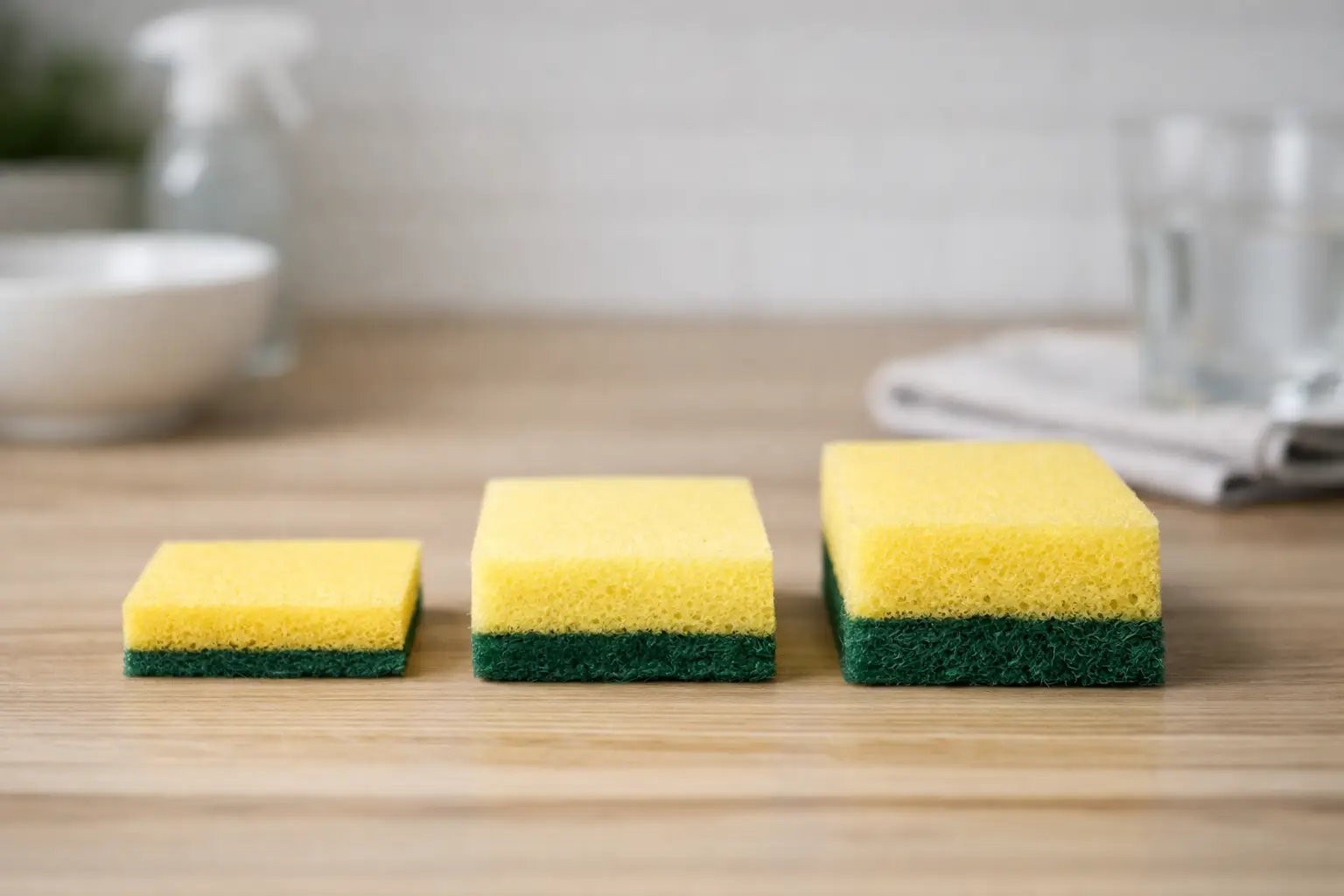
- Sponge thickness changes far more than speed. It affects dwell time, throw angle, short game touch, and how forgiving the rubber feels on passive shots.
- For most club players, 1.8 mm to 2.0 mm is the safest performance range. It gives enough spin and pace without making the racket overly lively.
- Max sponge is not automatically better. It rewards clean technique and active strokes, but it can expose timing issues and hurt control in serve receive.
- Your blade, rubber topsheet, and playing distance all matter. The right answer is rarely just “thicker is faster.”
If you are asking what sponge thickness should I use, you are already looking at one of the most important rubber decisions in table tennis. Two sheets of the same rubber can feel noticeably different at 1.8 mm, 2.0 mm, and max. The topsheet may be identical, but the sponge depth changes how the ball sinks in, how long it stays on the racket, and how much rebound you get when you accelerate.
For serious players, this is not a cosmetic spec. Sponge thickness influences opening loops, block stability, touch over the table, and even how confident you feel on serve receive. That is why the best choice depends on your level, your blade, and whether you win points through spin pressure, speed pressure, or placement.
What sponge thickness should I use for my level?
The fastest shortcut is to match thickness to how consistently you contact the ball.
Beginners and developing juniors usually benefit from 1.5 mm to 1.8 mm. That range keeps the racket more linear and easier to control. On flat hits and basic topspin, the ball does not catapult off the blade as aggressively, so timing errors are less punishing. You get cleaner feedback, which is useful when building stroke fundamentals.
Intermediate club players often land in 1.8 mm to 2.0 mm. This is the sweet spot for a huge percentage of league players because it balances spin potential with enough touch in the short game. If you loop regularly but still value control on blocks, pushes, and returns, 1.9 mm or 2.0 mm is usually a very smart default.
Advanced attackers and high-level loopers often prefer 2.0 mm to max. Once your contact is more explosive and your racket angle control is stable, the extra sponge gives more stored energy and more support on hard topspin. But that extra power comes with a cost. Passive shots can feel bouncier, and the margin for error over the table gets smaller.
How thickness changes performance
Thicker sponge generally increases speed and spin potential, but the real picture is more nuanced.
With more sponge, the ball penetrates deeper into the rubber system. That usually creates more dwell and more elastic rebound on active strokes. In practice, this can mean heavier topspin, easier power from mid distance, and a higher quality counterloop. It can also raise the throw angle depending on the rubber design, which helps clear the net but may require racket angle adjustments.
Thinner sponge tends to feel crisper and more direct. The ball reaches the blade sooner, so touch shots can feel more predictable. Blocks often come off flatter and lower. Players who stay close to the table, punch block, or prioritize placement sometimes prefer this cleaner response.
Here is the trade-off in simple terms: thicker sponge gives you more offense when you swing well, while thinner sponge usually gives you more stability when the rally is compact or reactive.
Sponge thickness comparison table
| Sponge thickness | Typical use case | Speed | Spin potential | Control in short game | Best for | |—|—|—:|—:|—:|—| | 1.5 mm | Learning strokes, all-around control | 5/10 | 5/10 | 9/10 | Beginners, defensive control, classic all-round play | | 1.8 mm | Balanced development setup | 6.5/10 | 6.5/10 | 8/10 | Developing juniors, all-round club players | | 2.0 mm | Modern offensive balance | 8/10 | 8/10 | 6.5/10 | Intermediate to advanced loopers | | Max | Full offensive output | 9/10 | 9/10 | 5.5/10 | Advanced attackers, strong topspin players |
These are directional numbers, not universal ratings. A hard Chinese rubber in 2.1 mm behaves very differently from a soft tensor in 2.0 mm, but the table is a useful baseline when comparing options.
What sponge thickness should I use on forehand vs backhand?
Many players should not use the same thickness on both sides.
On forehand, thicker sponge often makes sense because the stroke is usually longer and more powerful. If you loop, counter, or drive with your forehand as your main weapon, 2.0 mm or max can help you produce better quality ball. This is especially true if you use a tacky or harder rubber that benefits from a committed acceleration.
Backhand is more style-dependent. For compact backhands over the table, 1.8 mm or 2.0 mm is often easier to manage. You get enough rebound for topspin and counters, but more security on blocks, flicks, and quick redirections. If your backhand is a true attacking wing and you take the ball early with confidence, max can work well. If it is more of a control and placement wing, slightly thinner is often the better fit.
A very common performance setup is 2.0 mm or max on forehand and 1.8 mm or 2.0 mm on backhand. That is not a rule, but it is a proven starting point.
Blade and rubber pairing matters more than many players think
Sponge thickness never works in isolation. A 2.0 mm rubber on an OFF- carbon blade can feel quicker and less forgiving than max sponge on a flexible all-wood blade. That is why advanced equipment selection always looks at the full racket build.
If your blade is stiff, fast, and direct, dropping sponge thickness can improve control without killing performance. If your blade is softer and slower, moving up in sponge thickness can add the missing finishing power. Likewise, a very springy tensor often feels one step thicker than the number suggests, while a denser Chinese-style sponge may need more engagement to come alive.
Weight matters too. Going from 1.8 mm to max can add several grams per side, often around 3-6 g depending on the rubber. Across two sheets, that can shift the racket balance noticeably toward the head. Some players love the extra power. Others immediately feel slower in transition.
First-hand testing log: how the differences show up in real play
In controlled testing with the same offensive all-wood blade and the same rubber family across 1.8 mm, 2.0 mm, and max, the biggest differences were not on easy topspins. They showed up in the spaces between big shots.
At 1.8 mm, serve receive was calmer. Short pushes stayed shorter, and passive backhand blocks needed less adjustment. Opening loop quality was still strong, but there was slightly less kick from mid distance.
At 2.0 mm, the setup felt the most complete. There was enough sponge support for heavy opening loops and counters, but touch over the table remained manageable. For the broadest range of club play, this was the most balanced option.
At max, power on full forehand topspin was clearly better. Counterlooping had more depth and penetration. But the racket became more demanding on passive shots, especially against incoming spin. For players with late timing or a compact touch game, the extra thickness could become a liability.
Common buying mistakes
The most common mistake is choosing max sponge because it sounds more advanced. In reality, max only helps if you can compress the sponge and control the catapult. If your short game leaks points or your opening loop consistency drops, thicker is not helping you score more.
Another mistake is ignoring hardness. A 47.5-degree tensor in 2.0 mm and a 39-degree Chinese sponge in 2.1 mm do not play alike. Hardness, topsheet grip, blade flex, and your contact style all shape the result.
There is also the habit of copying pro specs. Elite players generate far more racket speed and have cleaner timing than most club competitors. Their sponge choice is built around high-level mechanics, not just preference.
FAQ
Is 2.0 mm the best sponge thickness for most players?
For many intermediate club players, yes. It gives strong spin and enough pace without becoming too jumpy in the short game. It is one of the safest all-around offensive choices.
Should beginners use max sponge?
Usually no. Max sponge can make timing and touch harder to manage. Most beginners improve faster with 1.5 mm to 1.8 mm because the response is easier to read.
Does thicker sponge always create more spin?
On active strokes, often yes. But spin also depends on topsheet grip, sponge hardness, and technique. A player with poor contact will not automatically produce more spin just by moving to max.
What sponge thickness is best for backhand?
For many players, 1.8 mm to 2.0 mm is ideal on backhand. It supports topspin and counters while keeping blocks and flicks under control.
Is thinner sponge better for blocking and control?
In many cases, yes. Thinner sponge tends to feel more direct and less bouncy, which helps on passive shots and close-to-table control.
If you want the safest performance answer, start with 2.0 mm on your main attacking side or 1.8 mm if control is your bigger priority. Then adjust based on what actually breaks down in matches, because the right sponge thickness is the one that lets your best patterns show up under pressure.