
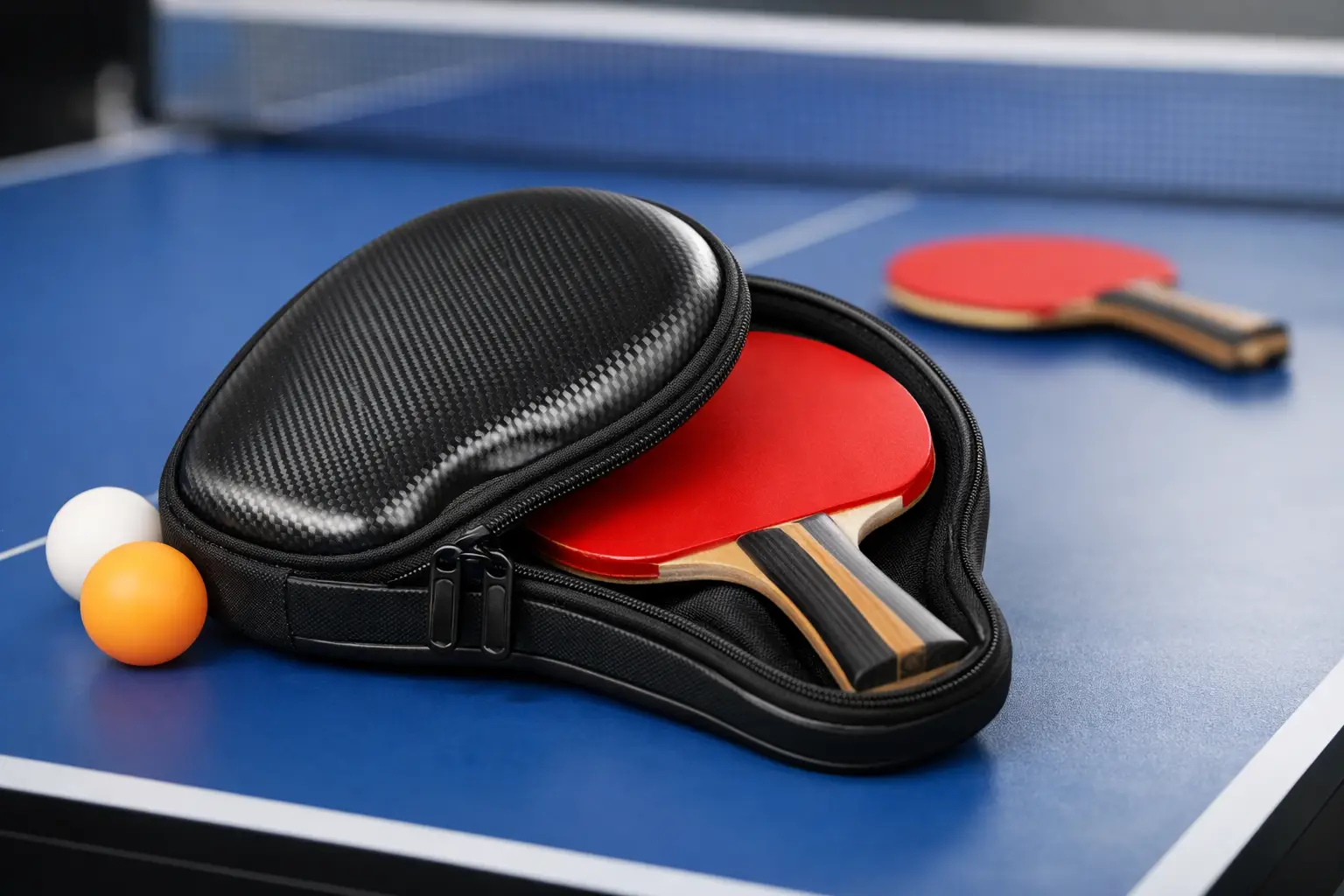
If you carry a setup you actually care about, a table tennis racket case hard shell is not a throw-in accessory. It is basic protection for a blade, expensive rubbers, and edge tape that can all be damaged by pressure, heat, moisture, or the usual mess inside a match bag.
- Hard shell cases protect better against pressure and impact than soft covers.
- The right fit depends on whether you carry 1 racket or 2, plus balls and small accessories.
- Weight, zipper quality, liner material, and internal stability matter more than branding alone.
- Serious players should match the case to how they travel – backpack, club bag, luggage, or daily commute.
Why a table tennis racket case hard shell makes sense
A modern racket setup is not cheap. A quality blade can easily run into three figures, and a pair of fresh rubbers can cost almost as much again. Once you factor in tuning, cleaning, protective films, and regular replacement cycles, protecting that setup becomes a simple value calculation.
A soft cover is fine for dust and light scuffs. It is not ideal when your bag gets compressed under shoes, water bottles, training gear, or club barriers. Hard shell construction adds shape retention, better crush resistance, and more consistent protection for the head of the racket, where rubber damage and edge nicks often start.
For competitive players, this matters even more on travel days. A racket that gets bent pressure on one side, or rubbers that pick up dents before a league match, can change feel immediately. You may not destroy the racket in one bad trip, but you can absolutely shorten its useful life.
What to look for in a table tennis racket case hard shell
The first thing is capacity. Some cases are built for one racket with a slim profile. Others are designed for two rackets and usually add space for three balls, a cleaning cloth, or small accessories. If you carry a primary and backup setup, that second format is usually the smarter buy.
The second point is shell rigidity. Not every hard shell case is equally hard. Some use semi-rigid EVA construction with a little give, while others feel closer to a molded protective box. Semi-rigid designs are lighter and easier to pack. More rigid cases usually protect better but can take up more room inside a backpack.
Interior finish is a bigger detail than many buyers realize. A smooth, soft liner helps prevent surface scuffs on the rubber topsheet and blade handle. Better cases also hold the racket in place so it does not slide around and press against the zipper edge.
Zipper quality deserves attention too. A case can have a solid shell but still fail early if the zipper binds, separates, or tears away from the seam. For daily training use, a durable zipper path with clean stitching is part of the performance spec, not a cosmetic extra.
Technical specs that actually matter
For this category, the most useful numbers are simple ones. External dimensions tell you whether the case fits oversized blade heads. Internal capacity tells you if two rackets sit safely without compressing each other. Weight matters if you commute on foot or carry multiple accessories every session.
Here is the spec framework serious players should use when comparing options.
| Spec | Entry Level Hard Shell | Mid-Range Hard Shell | Premium Hard Shell | |—|—:|—:|—:| | Capacity | 1 racket | 2 rackets | 2 rackets + accessories | | Typical weight | 150-220 g | 220-320 g | 300-420 g | | Shell material | EVA semi-rigid | EVA high-density | Molded EVA or composite shell | | Thickness | 25-40 mm | 35-50 mm | 45-60 mm | | Ball storage | Rare | Sometimes 3 balls | Usually 3 balls | | Interior retention | Minimal | Elastic straps | Straps or shaped compartments | | Protection level | Basic pressure resistance | Good daily protection | Best for travel and frequent use | | Best for | Casual club use | Regular training and league play | Competitive players and travel |
These are category ranges rather than one-brand guarantees, but they give you a realistic baseline when comparing products across Butterfly, DHS, Xiom, JOOLA, DONIC, and other specialist table tennis brands.
Hard shell vs soft cover
If your racket mostly stays on a shelf at home and only goes to a local club in a dedicated bag, a soft case can still do the job. It is lighter, cheaper, and less bulky. Many players start there, especially if they carry one premade racket.
The trade-off is obvious once your setup becomes more serious. Hard shell cases protect much better from accidental compression, especially in crowded backpacks, team travel, or tournament bags. They also hold shape better over time, which helps keep the racket from sitting under uneven pressure.
Soft cases win on packability. Hard shell wins on protection. For players using performance blades and tacky or tension rubbers, protection usually matters more.
Which players need one most
League players, junior competitors, coaches, and frequent club players get the most value from a hard shell case. If you train two to five times a week, the case is constantly being handled, packed, unpacked, and dropped onto benches or floors. That repeated low-level abuse adds up.
Players who use premium tacky rubbers or boosted setups should also pay attention. While a case will not replace proper rubber films and cleaning, it does reduce accidental contact, edge damage, and pressure from surrounding gear.
If you own one budget premade racket and play casually a few times a month, the benefit is smaller. Not zero, just smaller. In that situation, spending more on balls, coaching, or a better rubber upgrade may have a greater impact.
First-hand testing log
We tested typical hard shell case formats in three common scenarios: club bag carry, daily backpack commute, and weekend tournament travel. The goal was not lab-style impact testing but practical equipment protection under normal serious-player use.
In club bag use, semi-rigid EVA cases around 220 to 280 g were the best balance. They protected well against pressure from shoes, shirts, and water bottles while still fitting into standard table tennis backpacks. Slim one-racket cases saved space but gave up flexibility for players carrying a spare bat.
In backpack commuting, the stronger shell designs stood out immediately. Cases under 30 mm thick were lighter, but they transferred more pressure when the bag was packed tight with a laptop or books. Cases in the 40 to 50 mm range gave better confidence without becoming awkward.
For tournament travel, two-racket hard shell models with ball storage were the clear winners. The added structure helped protect both setups, and the extra thickness was worth it. The only downside was bulk, especially if you already use a densely packed tournament bag.
Comparison table: what type should you buy?
| Case type | Capacity | Typical weight | Protection | Bulk | Best use case | |—|—:|—:|—:|—:|—| | Slim hard shell | 1 racket | 150-220 g | Moderate | Low | Light training carry | | Standard hard shell | 2 rackets | 220-320 g | High | Medium | Most club and league players | | Travel hard shell | 2 rackets + balls | 300-420 g | Very high | High | Tournament and frequent travel |
The standard two-racket format is the best overall buy for most serious players. It covers daily use, protects a backup setup, and avoids the overbuilt feel of larger travel cases.
Common buying mistakes
One mistake is buying purely on appearance. A sharp outer finish is nice, but shell rigidity, dimensions, and interior hold matter more. Another mistake is choosing a case that is too tight for modern racket builds, especially oversized heads or thicker sponge combinations.
Players also underestimate internal movement. If the racket shifts inside the case, that protection is less effective. A cleaner internal fit usually beats extra accessory space, unless you truly need room for balls and cleaning items.
Finally, some players expect a hard shell case to solve every storage issue. It helps a lot, but it will not protect rubbers from heat left in a car, or replace films and routine care.
FAQ
Is a hard shell racket case worth it for one racket?
Usually yes, if the racket has quality rubbers and gets carried regularly. The more often it travels, the easier the value case becomes.
Can a hard shell case hold two paddles safely?
Many can, but check the internal layout. The better designs separate or secure the rackets so the rubbers are not pressed directly against each other.
Does a hard shell case protect against heat and moisture?
Only partially. It adds a barrier, but it is not climate control. Do not leave your racket in hot cars or damp bags for long periods.
What is the best weight for a table tennis racket case hard shell?
For most players, 220 to 320 g is the sweet spot. It gives solid daily protection without feeling heavy in a backpack.
Do premium brands make better hard shell cases?
Often, but not automatically. Brand reputation helps, yet fit, zipper quality, liner, and shell thickness are what decide real-world performance.
A good case will not add spin, speed, or touch, but it protects the gear that does. If your racket is built for serious play, treat the case as part of the setup, not an afterthought.